POLYGON1993 paints with broken signals
I've followed POLYGON1993 for about four years. On Instagram I followed him from several of my accounts, one after another, until Instagram banned me. I love his work, and this post is about him: who he is, how those images get made and where they've been going.
If you've never seen it, picture faces and bodies made of horizontal lines of light, usually an electric blue, that bend, stretch and come apart as if the signal were failing. It looks like a 90s television in its last good minutes, still showing something beautiful.
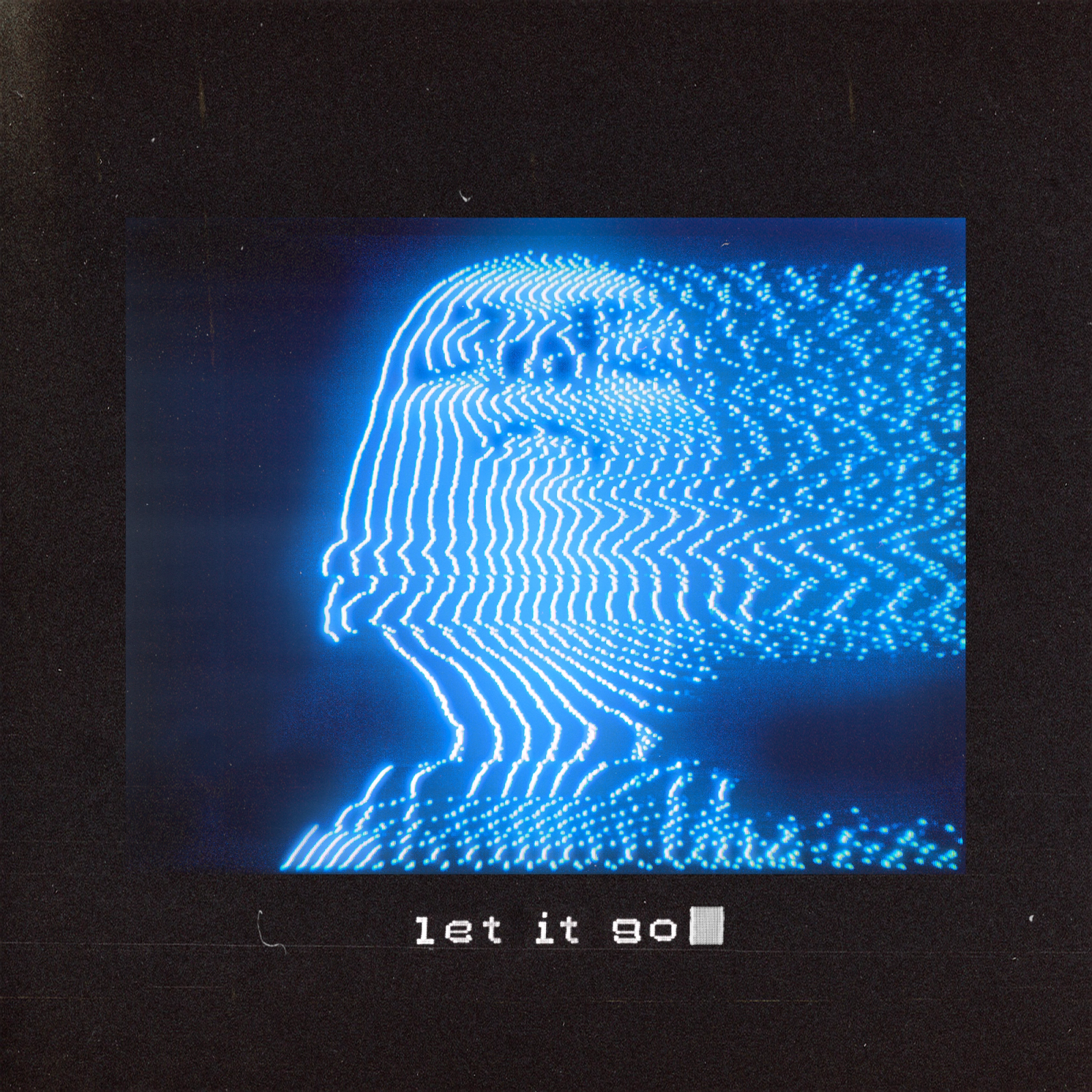
Veni, vidi, glitchi #
POLYGON1993 is a French visual artist, film director and media scenographer based in Paris. His Tumblr sums him up in three words: "Veni, vidi, glitchi."
It started with music. In a 2021 interview, he explained that in 2015 he was composing songs that were "very glitchesque" and wanted visuals with the same intensity. As a kid of the 90s he was already drawn to the look of VHS, and when he found analog glitch art, he decided to try it himself.
A television in the middle of everything #
What makes his work different from a filter is the hardware. He works with CRT televisions and circuit-bent video equipment from the 80s and 90s. Circuit bending means opening an electronic device and rewiring it on purpose, so it makes errors it was never designed to make. Any image he sends through that chain, a photo, a video or a drawing, comes out the other side distorted by the machines, and he recomposes the result into a finished piece. These days the process mixes photography, illustration and animation with the analog gear.
The screen matters as much as the circuits. About the colors of a CRT, he said in the same interview: "you just can't emulate this."
His early portraits show the idea at its most direct. When he shared a series of analog glitch portraits in 2018, he described the work as "traditional portrait art crashing into a hard and corrupted analog circuit-bent imagery."
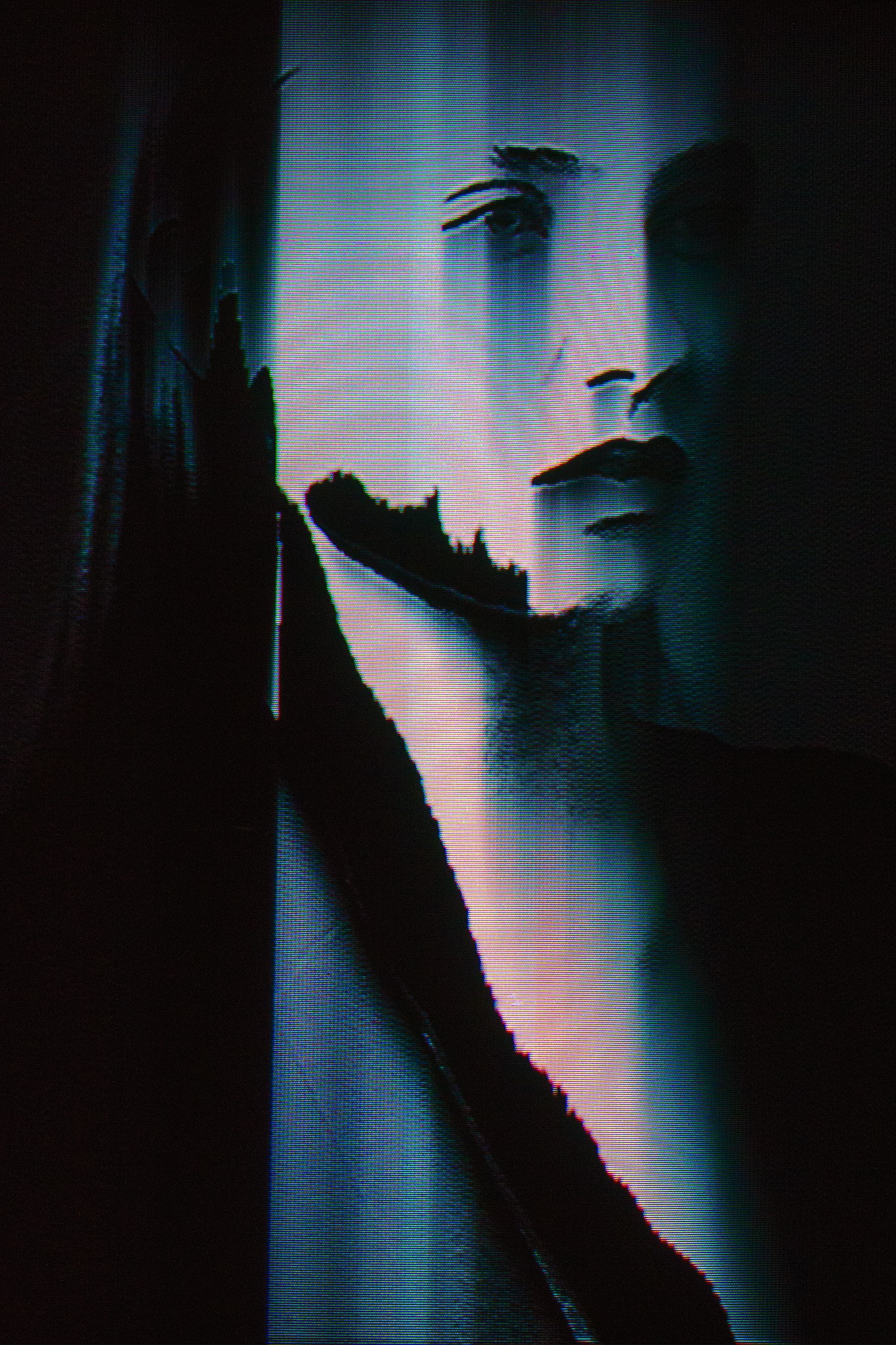
Nostalgia, and what's under it #
The obvious theme is nostalgia, but he goes further when he talks about it. In a 2024 interview with OpenSea, he listed the themes he keeps coming back to: nostalgia, depression, loneliness, "but also beauty in the breakdown." In 2021 he put it this way: "I guess I'm chasing this residual image of myself spending countless hours in front a screen when I was a kid."
That childhood shows everywhere. He grew up with trading cards, video games and MMORPGs, and he still collects Japanese arcade games, trading cards and consoles from the 90s and 2000s. Japanese pop culture runs through the work, from mecha suits to direct nods to Neon Genesis Evangelion and Ghost in the Shell. He also says the colors in his pieces come from the music he listens to while working.
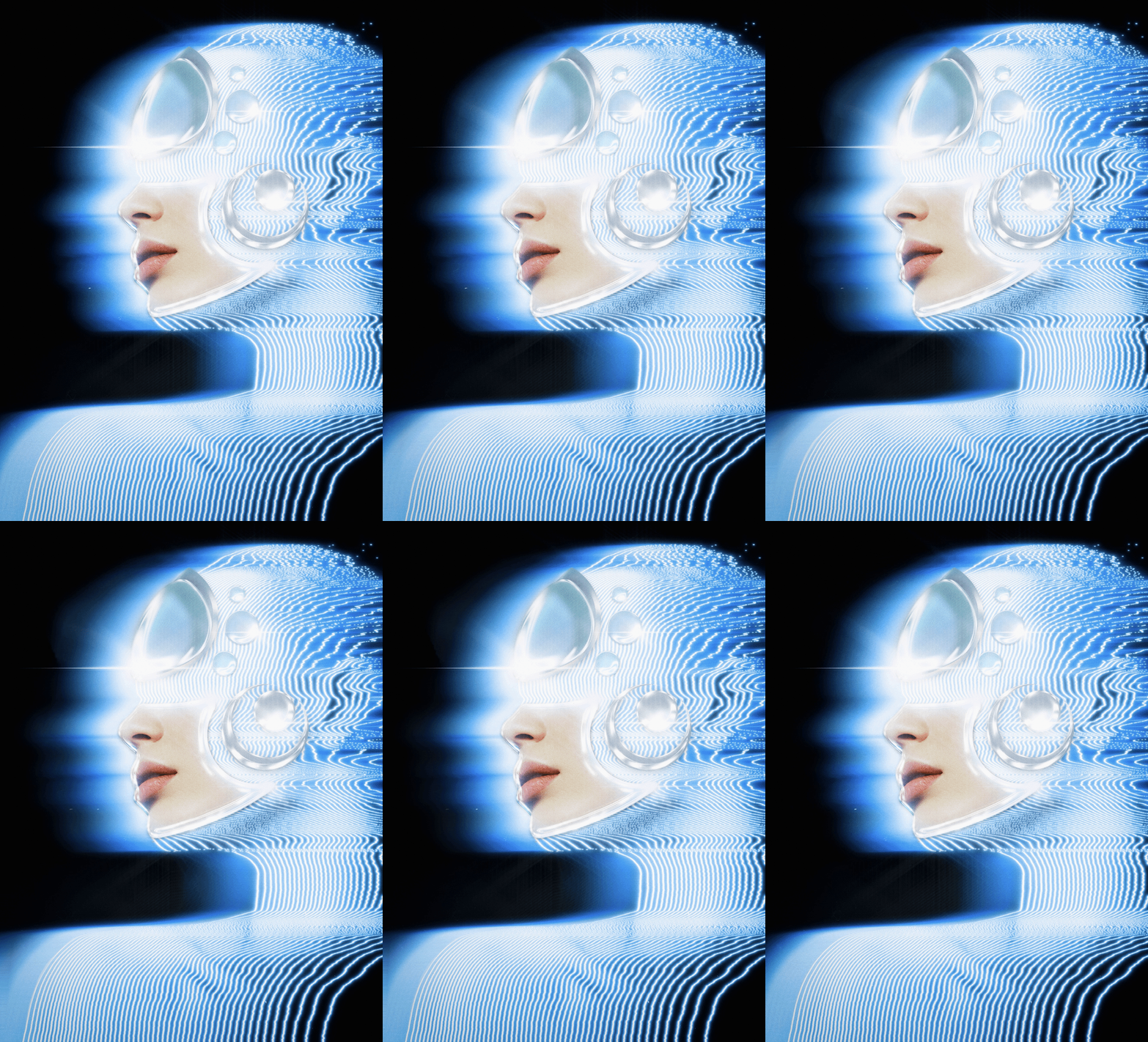
Music, brands and a tour that stopped #
His work as a scenographer and director has put those visuals on stages and in music videos. He has worked with Tame Impala, Charli XCX, Grimes and A$AP Rocky, and with companies like Bandai Namco, Pantone, Sony Music and Warner Music.
One of those jobs didn't go as planned. In early 2020 he was working as a content artist on Tame Impala's new live show, and the tour stopped in March because of the pandemic. With the shows on hold, he started selling limited edition holographic prints, a way to bring the work into the physical world, which he says he had always wanted.
On-chain #
Around the same time, his work found a second home on the blockchain. He has released pieces on Tezos, back in the hic et nunc days, and on Ethereum through platforms like SuperRare and Foundation. In 2024 he dropped The Dance Lesson on Base, and explained to OpenSea that he chose that network for its free mints and "almost non-existent gas fees", which make the work easier to collect. Some of his drops also have game mechanics, like burning one piece to redeem another.
In 2021, he was already blunt about Instagram's algorithm, which he said was "slowly killing every artist's fire", and he hoped this new space would "take the power back from the algorithms." Instagram, at least, was never very kind to either of us.
Some of his series:
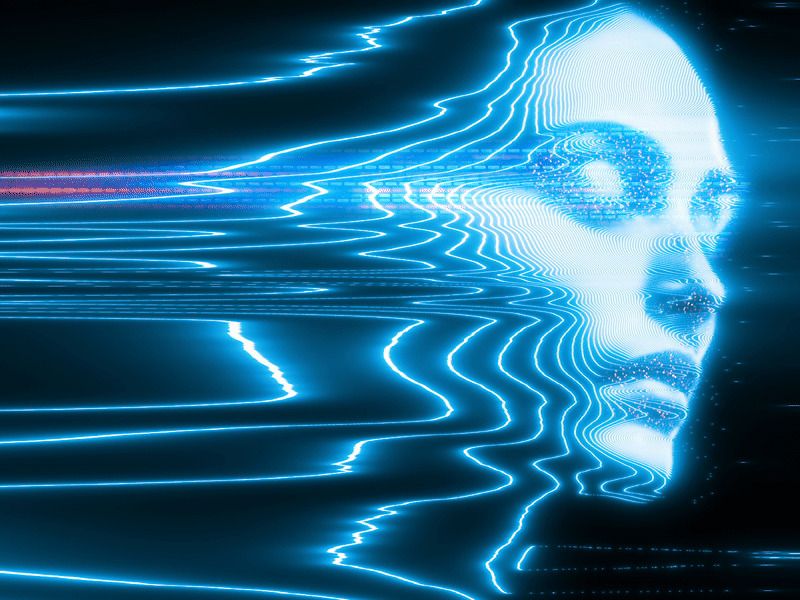
azure, light pulled sideways out of a face, as if the signal were being dragged off the screen:
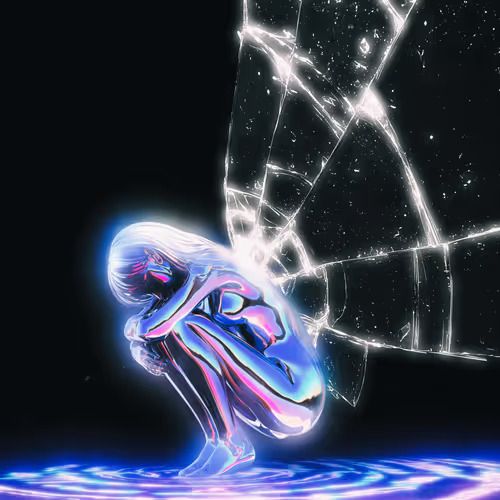
Broken Wings, a small chrome figure under a sky that cracks like glass:
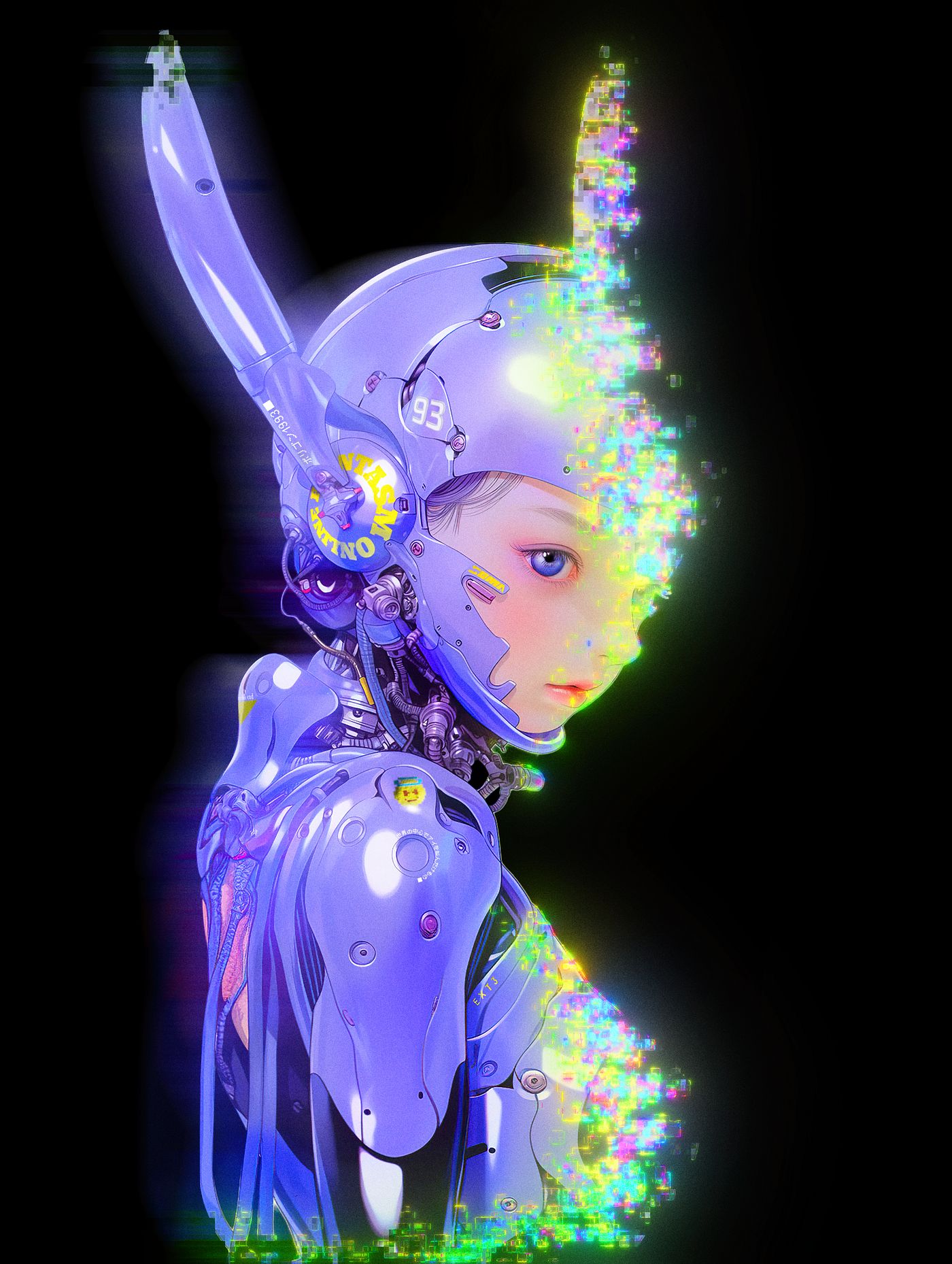
Panzer Perfume, where the anime and mecha side of his work comes out, with a pilot dissolving into pixels:
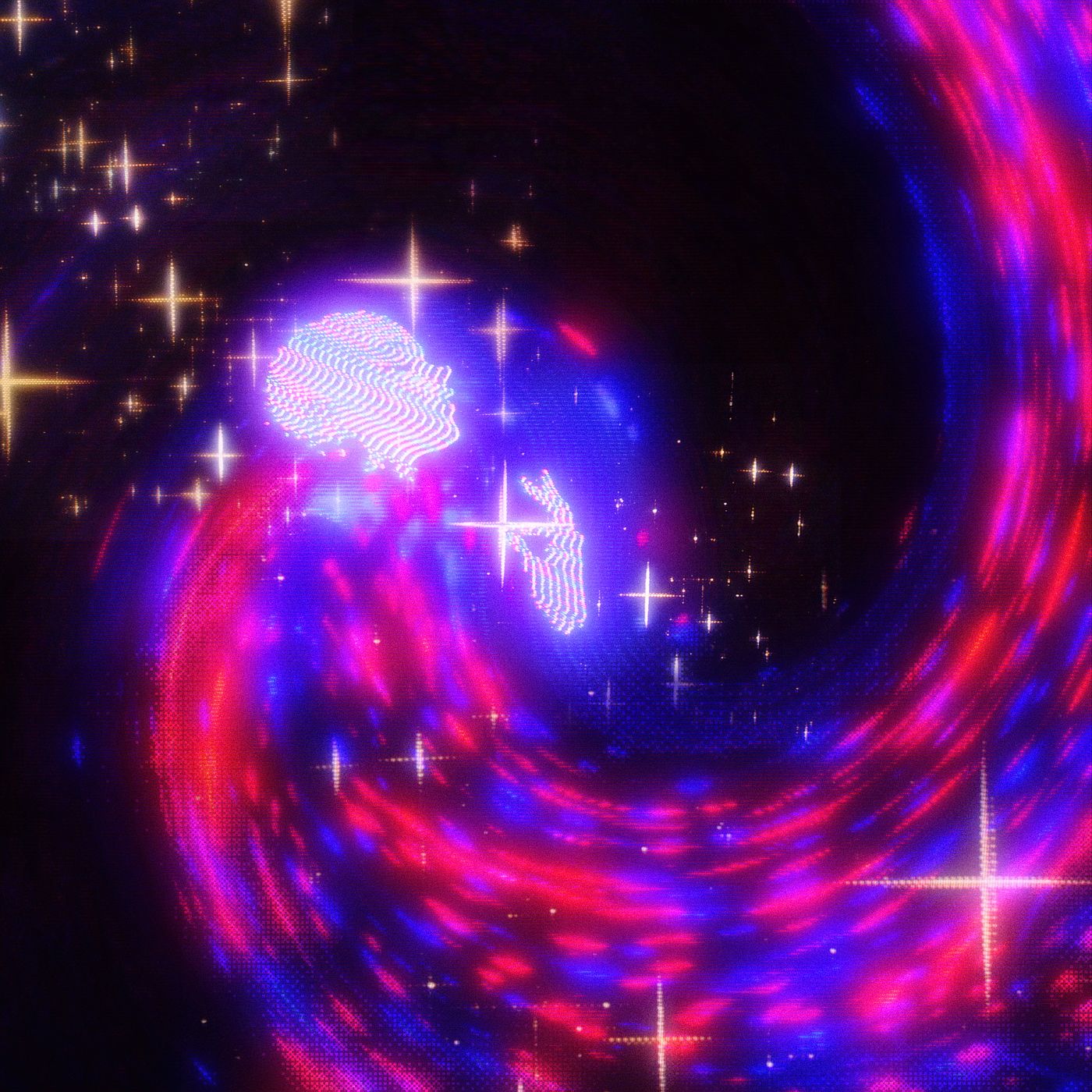
And First Flight, a single piece with a figure curled up inside a spiral of light and stars:
From the screen to the room #
The holographic prints were only the beginning. His work now includes canvases, collectible objects, plexiglass sculptures and large installations, and it has been shown in the United States, Japan, France, the United Kingdom, Portugal, Italy and South Korea.
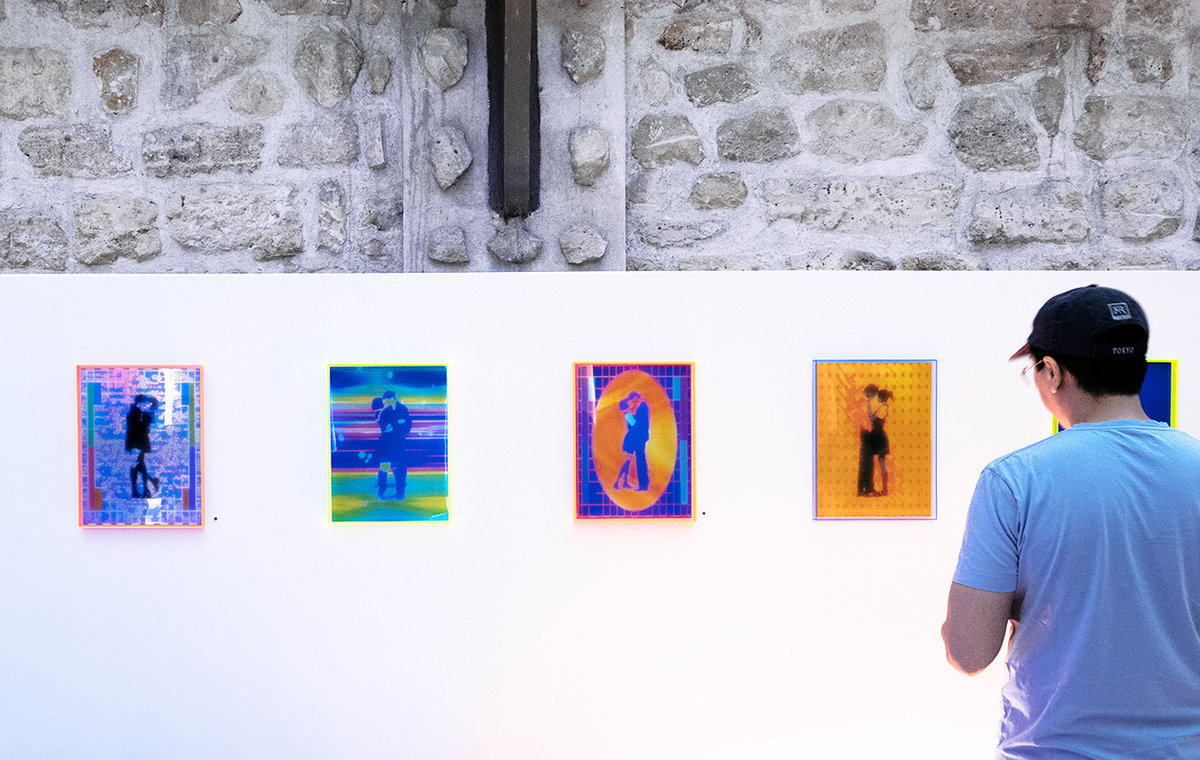
In 2025 he had a solo show in Tokyo, Paradigm Shifters, at The Harmonyst gallery in Hiroo. And in July 2026 he finally had his first solo exhibition in France, in his own city. Koi No Yokan opened at ArtVerse gallery in Paris, timed with Japan Expo. The title comes from a Japanese expression for the certainty, when you meet someone, that you're going to fall in love with them.
The show brought together around fifteen works: acrylic sculptures, canvas prints and rooms built around light, with holographic materials borrowed from trading card games. Among them was his first plexiglass sculpture, REI, based on an animated piece he made a few years ago. The highlight was a collaboration with Mitsuhiro Arita, one of the first illustrators of the Pokémon trading card game, whose work had never been shown in a contemporary art gallery before.
Where to follow him #
His main channel, he told OpenSea, is X, where he's @Polygon1993. His series are collected on Verse, and he also has pages on SuperRare and objkt, plus a Tumblr.
On Instagram he's @polygon1993. Try not to get banned.